

Introduction
Chassis and steel structures are important components of various industrial assets and operational vehicles. In heavy equipment, for example, the chassis is one of the components that supports various parts while also handling loads and stresses during operation. Meanwhile, in industrial and construction facilities, steel structures are used as part of buildings, platforms, supports, frames, and various other supporting structures.
Because most of these components are made of steel, corrosion is one of the risks that needs to be considered. Exposure to water, humidity, mud, chemicals, dust, marine environments, temperature changes, and demanding operating conditions can accelerate the degradation of steel surfaces.
One method commonly used to help protect chassis and steel structures is painting or industrial coating. A coating layer can create a barrier between the steel surface and its surrounding environment, helping reduce exposure to factors that can trigger corrosion.
However, an important question arises: is painting chassis and steel structures really effective in preventing corrosion?
The answer does not depend solely on the paint being used. The effectiveness of a coating system is influenced by surface condition, surface preparation, coating system selection, application methods, environmental conditions, and how the coating is maintained after application.
Understanding these factors is important to ensure that painting work does not merely produce a surface that looks new, but also provides protection appropriate to the asset’s operational requirements.
Why Do Chassis and Steel Structures Need Protection?
Steel has mechanical characteristics that make it widely used across industries. The material offers the strength and load-bearing capacity required for various applications, ranging from vehicles and heavy equipment to building structures, machinery supports, and industrial facilities.
However, steel can also experience corrosion when its surface interacts with certain environmental conditions. Under suitable conditions, water and oxygen can trigger oxidation on the steel surface, resulting in the formation of rust.
In industrial environments, this risk can become more complex. Chassis and steel structures are not always located in dry and controlled environments. In the mining and heavy equipment sectors, for example, surfaces may be exposed to mud, water, dust, rocks, and various contaminants during operations.
Vehicles and equipment used outdoors are also exposed to changing weather conditions and humidity, which can increase the risk of corrosion. Meanwhile, in industrial facilities that use certain chemicals, metal surfaces may face more aggressive exposure.
Uncontrolled corrosion can progress from surface-level damage to material degradation. In its early stages, corrosion may only appear as discoloration or small rust spots. However, if it continues to develop, corrosion can cause the surface to become rough, coating layers to lift, and the material to lose thickness.
For companies, these conditions can increase maintenance requirements. Work that initially requires only cleaning and touch-up may eventually require more intensive surface preparation, repair, or even component replacement if the damage becomes severe enough.
Therefore, protecting chassis and steel structures should be part of asset maintenance and corrosion management, rather than something performed only when significant rust has already appeared.
How Effective Is Painting in Preventing Corrosion?
Painting can be an effective method for helping protect steel against corrosion when the coating system is properly selected and applied.
The basic principle is to create a barrier or protective layer between the steel surface and the external environment. This layer helps reduce direct contact between the steel and water, humidity, oxygen, chemicals, and other contaminants that can contribute to the corrosion process.
However, it is important to understand that coating does not make the material completely immune to corrosion. Its effectiveness depends heavily on the overall quality of the protection system.
A Coating System Is More Than Just Paint
In industrial applications, surface protection typically does not rely on a single layer. A coating system may consist of several layers with different functions, such as primer, intermediate coat, and topcoat.
The primer serves as the initial layer that helps improve adhesion to the substrate while providing surface protection. The intermediate coat can provide additional thickness and protection, while the topcoat functions as the outermost layer exposed to environmental conditions.
The system should be selected according to the asset’s operating conditions. A heavy equipment chassis frequently exposed to mud and abrasion, for example, may have different requirements from a steel structure located inside a manufacturing facility.
This means that coating effectiveness should not be assessed solely based on the type or brand of paint used. The suitability of the coating system for the operating conditions is one of the key factors.
Surface Preparation Is a Key Factor
One of the factors that often determines coating performance actually occurs before the paint is applied, namely surface preparation.
The steel surface to be coated must be in an appropriate condition. Rust, oil, grease, dust, moisture, mill scale, contaminants, and damaged old coatings can interfere with the adhesion between the coating and the substrate.
If coating is applied directly to a surface that has not been properly prepared, the coating may experience various problems, such as poor adhesion, blistering, peeling, cracking, or other forms of coating failure.
Therefore, surface preparation needs to be adjusted to the condition of the surface and the coating system specifications.
The methods used may include cleaning, degreasing, mechanical preparation, and abrasive blasting or sandblasting for certain conditions.
For applications requiring a specific level of cleanliness and surface profile, abrasive blasting can help remove rust, mill scale, old coatings, and other contaminants while creating a surface profile that supports coating adhesion.
In other words, coating quality is closely related to the quality of the surface beneath it.
How Can Coating Service Life Be Maximized?
Painting carried out with the appropriate system can provide long-term protection. However, coating remains a protective layer that is exposed to environmental conditions and operational activities.
Therefore, maximizing coating service life requires an approach that includes proper system selection, correct application, inspection, and maintenance.
1. Match the Coating to the Operating Conditions
Not all coatings have the same characteristics. Selection should consider substrate type, humidity levels, chemical exposure, temperature, abrasion, UV exposure, and other environmental conditions.
A heavy equipment chassis, for example, faces different conditions from a steel structure located indoors. Similarly, a structure operating in a coastal area has different exposure levels compared with an asset located in an indoor environment.
Therefore, coating selection should be based on the service environment and performance requirements, rather than solely on the final appearance.
2. Ensure Proper Surface Preparation
Surface preparation is one of the fundamental elements of a coating system. Before application, the surface needs to be cleaned and prepared according to the required specifications.
The more closely the surface condition meets the coating requirements, the greater the opportunity for the system to achieve the expected adhesion and performance.
This stage also helps reduce the risk of contaminants becoming trapped beneath the coating, which could trigger coating deterioration over time.
3. Pay Attention to Application Conditions
Environmental conditions during application can affect coating performance. Temperature, humidity, area cleanliness, surface condition, and the potential for condensation need to be considered.
If application conditions do not meet the requirements of the coating system, the curing process and adhesion may be affected.
Therefore, industrial painting work needs to take into account actual field conditions and the technical data of the coating system being used.
4. Apply the Coating Thickness According to Specifications
Coating thickness or Dry Film Thickness (DFT) is one of the important parameters in coating work.
A coating layer that is too thin may provide less protection than required by the system. On the other hand, applying a coating that is too thick does not necessarily mean better protection, as it can affect curing and coating characteristics.
Therefore, coating thickness should be measured according to the system specifications and application requirements.
5. Conduct Regular Inspections
After the coating has been applied, the surface condition still needs to be monitored. Regular inspections can help identify damage such as scratches, peeling, blistering, cracking, or areas that are beginning to show signs of corrosion.
Early detection allows companies to perform touch-up or repair before the damage becomes more extensive.
This approach can become part of preventive maintenance and help companies manage coating requirements in a more planned manner.
6. Address Coating Damage Promptly
Chassis and steel structures used in industrial activities can experience impacts, friction, abrasion, and damage caused by operational activities.
Damaged coating areas can become entry points for water and contaminants to reach the steel surface. Therefore, coating damage should not be left untreated for too long.
Local repairs or touch-ups can be performed according to the condition of the damage and the coating system specifications. If the damage has become widespread, further evaluation is required to determine whether a partial recoating or a more comprehensive coating renewal is necessary.
Factors That Determine the Effectiveness of Painting Chassis and Steel Structures
Based on the discussion above, the effectiveness of industrial painting on chassis and steel structures can be influenced by several interconnected factors.
The first is substrate condition. A clean surface that has been properly prepared provides a better foundation for the coating system.
The second is coating system selection. The system needs to be suitable for the asset’s environment and operational requirements.
The third is application method and quality. The coating needs to be applied according to the specified procedures, thickness, curing requirements, and environmental conditions.
The fourth is inspection and maintenance. A coating system is not maintenance-free. The condition of the coating needs to be monitored so that damage can be identified and addressed at an early stage.
By considering all of these factors, companies can optimize the role of coating as part of their asset protection strategy.
Painting as Part of a Preventive Maintenance Strategy
In industrial asset management, the highest costs do not always come from the coating work itself. Damage that develops as a result of corrosion can lead to additional consequences, including repairs, replacement, downtime, and operational disruptions.
Therefore, painting and surface protection can be positioned as part of a preventive maintenance strategy.
Rather than waiting until a chassis or steel structure experiences severe damage, companies can conduct regular inspections and maintenance to assess coating conditions and determine the necessary actions.
This approach allows activities such as cleaning, touch-up, repair, or recoating to be performed based on the actual condition of the asset.
In this way, industrial coating is not only about improving the appearance of a surface, but can also support long-term asset management.
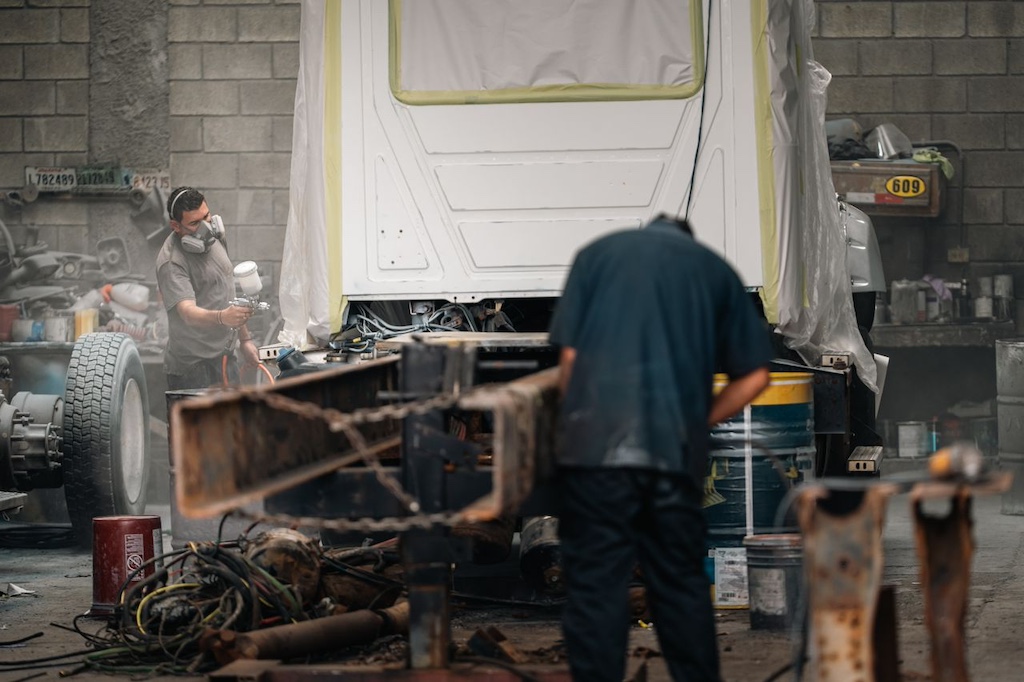
Applications Across Various Industrial Sectors
The need to protect chassis and steel structures can be found across various sectors with different environmental characteristics.
In the automotive and transportation sectors, coatings can help protect chassis and various vehicle structures against humidity, water, dust, and other environmental conditions.
In the heavy equipment and mining sectors, protection requirements can be more complex because assets may operate in environments involving mud, dust, water, impact, and high levels of abrasion.
In the manufacturing sector, industrial coating can be applied to steel structures, machinery supports, equipment, piping, and various facilities that require surface protection.
Meanwhile, in the construction and energy sectors, coatings can be used on various steel structures and facilities operating in outdoor or industrial environments.
Each application requires a different approach. Therefore, asset condition and operating environment should serve as the basis for determining the appropriate surface protection system.
Conclusion
So, is painting chassis and steel structures effective? Painting can be an effective method for helping control corrosion risks when it is applied as a coating system that is appropriate for the asset’s condition and operating environment.
Its effectiveness is not determined solely by the paint being used. Surface preparation, coating system selection, application method, coating thickness, environmental conditions, inspection, and maintenance are interconnected factors that determine protection performance.
Chassis and steel structures used in industrial environments face various types of exposure that can accelerate degradation. Therefore, a planned surface protection approach can help companies maintain asset condition while managing maintenance requirements in a more systematic manner.
For industrial coating and surface protection requirements, Hasgara provides solutions that can be adapted to asset characteristics, surface conditions, and operational requirements. With proper planning and application, coating can become part of an asset protection and preventive maintenance strategy to support long-term reliability and operational efficiency.
Read other Articles: What Is Protective Coating with Sandblasting?