

Introduction
Epoxy floor coating is increasingly used in industrial areas, warehouses, workshops, hospitals, and commercial spaces because it is known for its strength, durability, and clean professional appearance. Besides improving floor aesthetics, epoxy also helps protect surfaces from friction, heavy loads, dust, and exposure to light chemicals.
However, achieving a strong and long-lasting epoxy floor coating does not depend only on the quality of the materials used. Proper application techniques are also an important factor in determining the success of the epoxy coating.
Many cases of peeling, cracking, or uneven epoxy floors are caused by poor floor preparation or incorrect application methods. That is why understanding the stages of epoxy floor coating application is very important to achieve optimal, durable, and reliable results.
Floor Preparation Before Epoxy Application
Preparation is the most important stage in the epoxy floor coating process. No matter how good the epoxy material is, the result will not be optimal if the floor condition is not properly prepared.
The floor surface should be:
- Clean
- Dry
- Even
- Free from dust and oil
- Free from major cracks or serious damage
Concrete floors that still contain moisture can prevent the epoxy from bonding properly. Therefore, the floor’s moisture level usually needs to be checked before the application process begins.
In addition, surface cleaning is a crucial part of the preparation stage. Dust, oil, grease, and other residue must be completely removed so they do not affect the epoxy adhesion.
Some common surface preparation methods include:
- Floor grinding
- Shot blasting
- Sanding
- Industrial vacuum cleaning
If there are cracks or holes on the floor, those areas should be repaired first using special repair materials before the coating process starts.
Proper preparation helps the epoxy bond more strongly and creates a smoother and more durable surface.
Primer, Base Coat, and Top Coat Application Stages
Once the floor condition is ready, the epoxy application process is usually carried out in several main layers to provide maximum protection.
1. Primer Coat Application
The primer is the base layer that helps the epoxy bond more strongly to the concrete surface.
This layer also helps seal the floor pores, preventing air bubbles from appearing during the next coating stages.
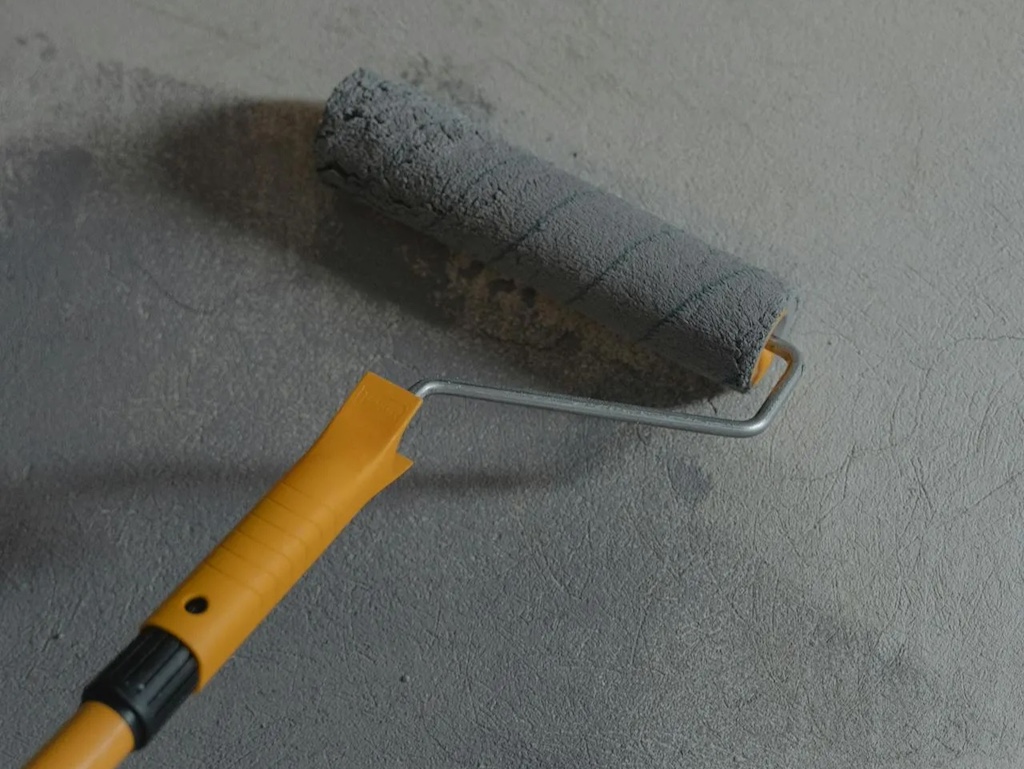
The primer is usually applied evenly across the floor surface using a roller or scraper.
2. Base Coat Application
After the primer dries, the next stage is applying the base coat or main epoxy layer.
At this stage, the epoxy begins forming a protective layer that provides resistance against:
- Heavy loads
- Friction
- Abrasion
- Exposure to certain liquids
The thickness of the base coat can be adjusted according to the area’s operational needs. Heavy industrial areas usually require thicker coatings than regular commercial spaces.
In some cases, additional materials such as silica sand can also be used to increase strength or create an anti-slip surface.
3. Top Coat Application
The top coat is the finishing layer that provides additional protection while improving the floor’s appearance.
This layer helps increase:
- Scratch resistance
- Chemical resistance
- Glossy or matte finishing effects
- Ease of floor cleaning
The top coat also makes the epoxy floor look cleaner, more professional, and more durable for long-term use.
Application Techniques for Smooth and Durable Results
Besides high-quality materials, proper application techniques are essential for achieving the best epoxy floor coating results.
The coating process must be applied evenly to prevent:
- Uneven surfaces
- Differences in coating thickness
- Air bubbles
- Roller marks or visible layer joints
Because of this, the coating process is usually carried out using specialized tools such as epoxy rollers, squeegees, and spike rollers to help level the coating and remove trapped air.
Temperature and environmental conditions must also be considered during the application process. Areas that are too humid or too hot can affect drying time and the overall quality of the epoxy finish.
In addition, each coating layer requires a specific drying time before moving on to the next stage.
In general:
- Primer takes several hours to dry
- Base coat requires a longer curing time
- Top coat usually needs 24–72 hours before the area can be fully used
During the curing process, the area should not be exposed to heavy traffic to ensure maximum coating performance.
Proper curing allows the epoxy to reach its optimal strength and improves its long-term durability.
Conclusion
Epoxy floor coating is not only about improving floor appearance but also about creating strong and long-lasting protection for various industrial and commercial needs.
From floor preparation and primer application to base coat and top coat installation, every stage plays an important role in determining the final quality of the coating. Combined with proper application techniques and sufficient curing time, epoxy coating can provide a stronger, cleaner, and more durable floor surface for daily operational activities.
When applied correctly, epoxy floor coating becomes a long-term investment that helps maintain floor quality while supporting comfort, safety, and productivity in the workplace.
Read other Articles: The Role of Floor Coating in Supporting Workplace Safety