

In maintenance, restoration, or repainting projects, removing old paint is often one of the most time-consuming steps. Whether on iron, steel, wood, or machine components, damaged or peeling paint must be removed so that the new coating can adhere properly.
The two most commonly used methods are sandpaper (sanding) and paint remover. Both aim to eliminate old paint layers, but they differ in how they work, their level of effectiveness, and their impact on the material surface.
So, which one is more effective? The answer depends on the specific needs and working conditions.
Differences in Working Method & Impact on the Surface
Sandpaper works mechanically through friction. The paint surface is rubbed using sandpaper sheets or sanding machines until the layer is gradually removed. This method is simple and widely available in various grit levels.
However, because it relies on direct friction, sanding can cause scratches or wear down the base material if not done carefully. On thin metal surfaces or detailed components, extra precision is required to avoid damaging the original structure.
In contrast, paint remover works chemically. Its active formula penetrates and softens the paint layer, weakening its adhesion so it can be lifted without excessive force. This approach generally involves less friction on the base surface.
To see how paint remover is applied, you can watch the following demonstration video:
With the right method, paint removal can be done in a more controlled and efficient way.
Effectiveness in Terms of Time & Labor
From a time and labor perspective, the difference between sandpaper and paint remover becomes more noticeable, especially in large-scale projects.
Using sandpaper—particularly by hand—requires significant physical effort and relatively more time, especially if the paint layer is thick or consists of multiple coats. For large surfaces, this method can become less efficient and physically demanding.
On the other hand, paint remover helps speed up the process because it works by softening the paint layer directly. After waiting according to the usage instructions, the paint can be removed more easily. In industrial settings or routine maintenance projects, this time efficiency can be a major advantage.
However, overall effectiveness still depends on the type of paint, layer thickness, and surface condition.
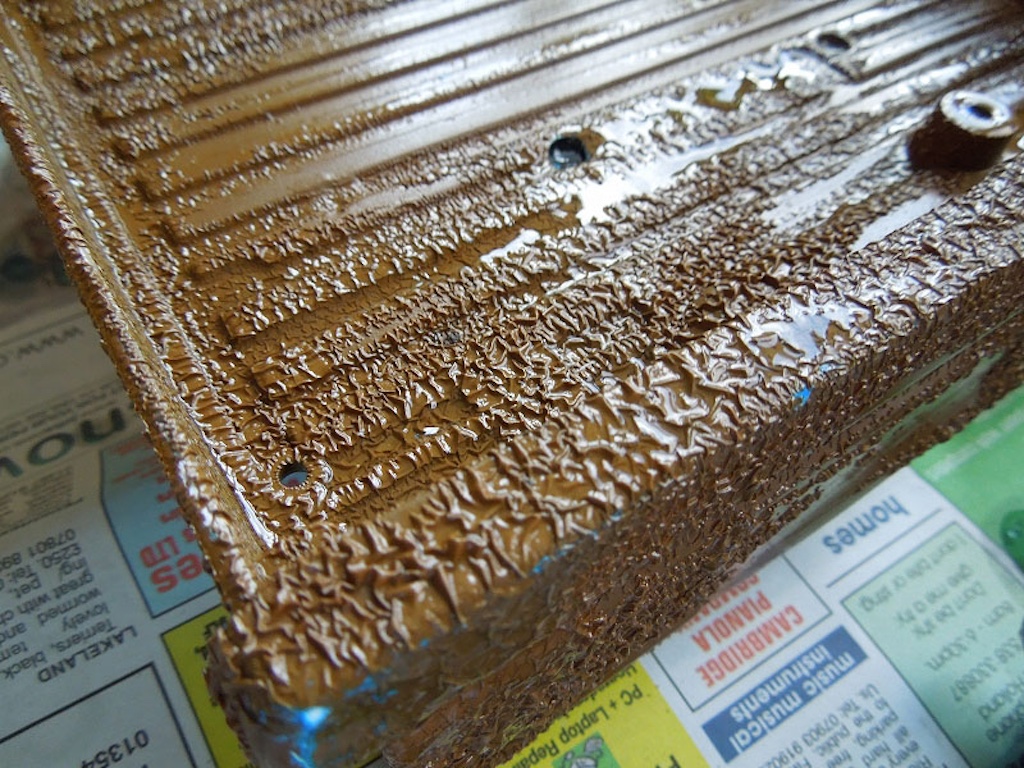
When to Choose Sandpaper and When to Choose Paint Remover
The choice of method should be adjusted to the specific job requirements.
Sandpaper is more suitable when:
- The working area is relatively small
- The paint layer is not too thick
- Surface smoothing and finishing are needed
- Specialized chemical products are not available
Meanwhile, paint remover is more appropriate when:
- The paint layer is thick or consists of multiple coats
- The surface has many details and hard-to-reach corners
- Time efficiency is important for larger-scale work
- You want to minimize the risk of scratching the base material
In practice, both methods can even be combined. Paint remover can be used to lift the main paint layers, while sandpaper can be applied afterward for finishing and smoothing before repainting.
By considering the material condition and desired final result, the stripping process can be carried out more effectively and efficiently.
Conclusion
Both sandpaper and paint remover have their own roles and advantages in paint stripping processes. Sandpaper provides direct control through mechanical friction, while paint remover offers a more practical approach using chemical action.
There is no single method that is best for every situation. The key is understanding the surface characteristics, paint thickness, and efficiency requirements of the job.
By choosing the right method, surface preparation becomes more effective, repainting results are more optimal, and the overall work process can run more efficiently without compromising quality.
Read other Articles: Paint Remover: A Fast Solution to Remove Paint Without Damaging Surfaces